The Opening, 2026
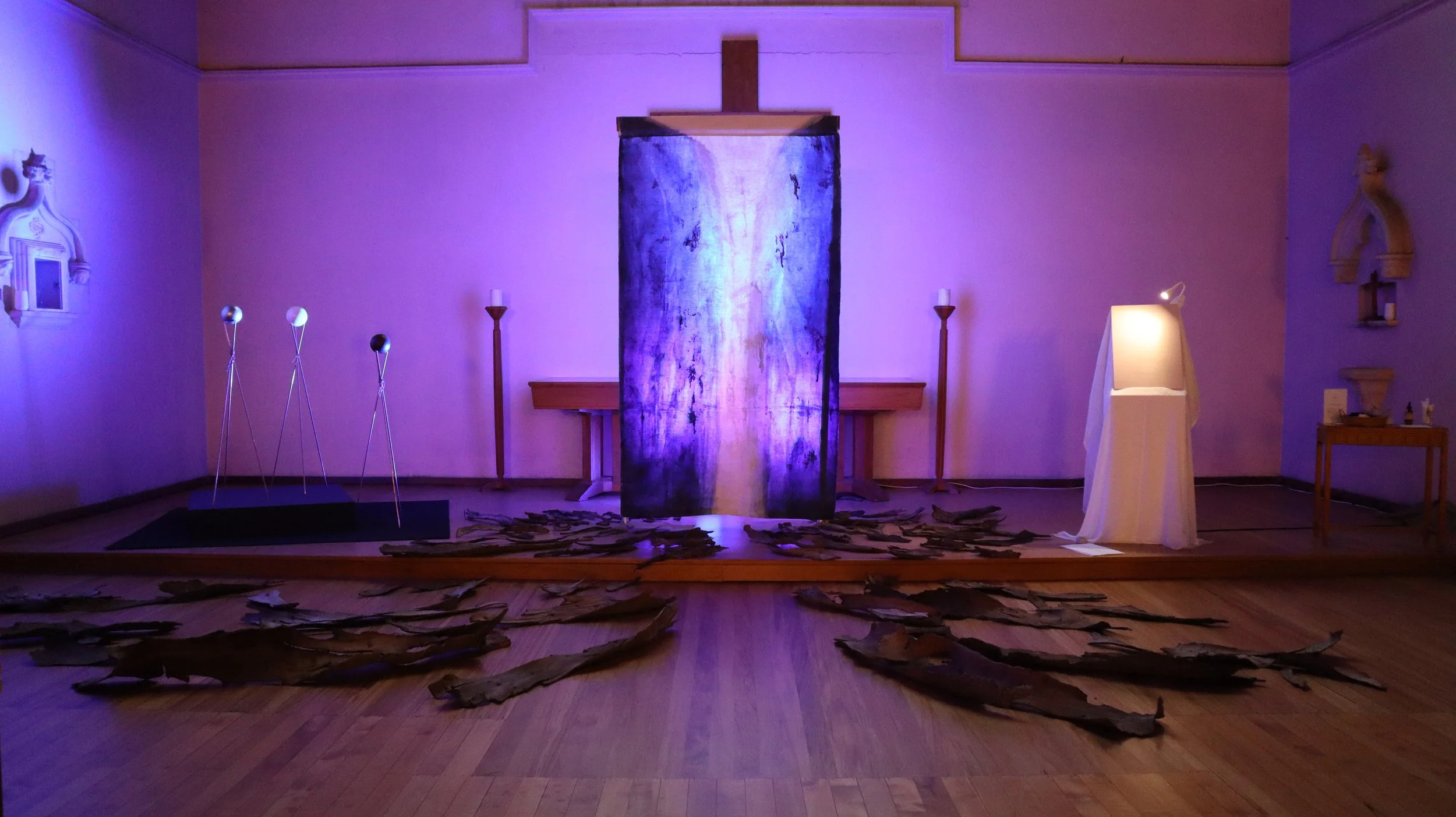
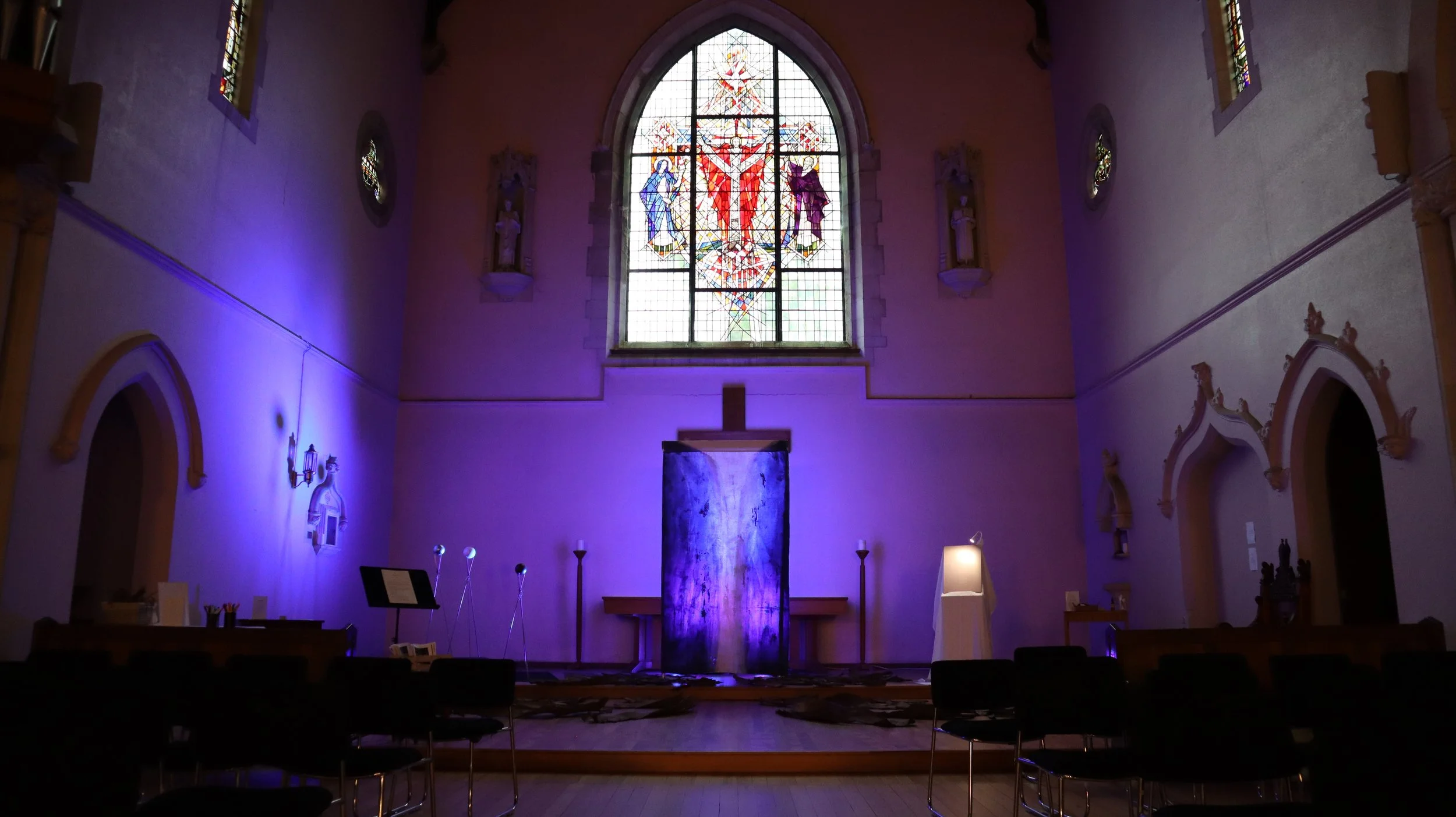
The Opening is a site-responsive installation engaging the architectural and spiritual history of its location. Drawing from the historical account of the torn temple veil, the work reflects on rupture as both fracture and threshold — a moment where separation gives way to encounter.
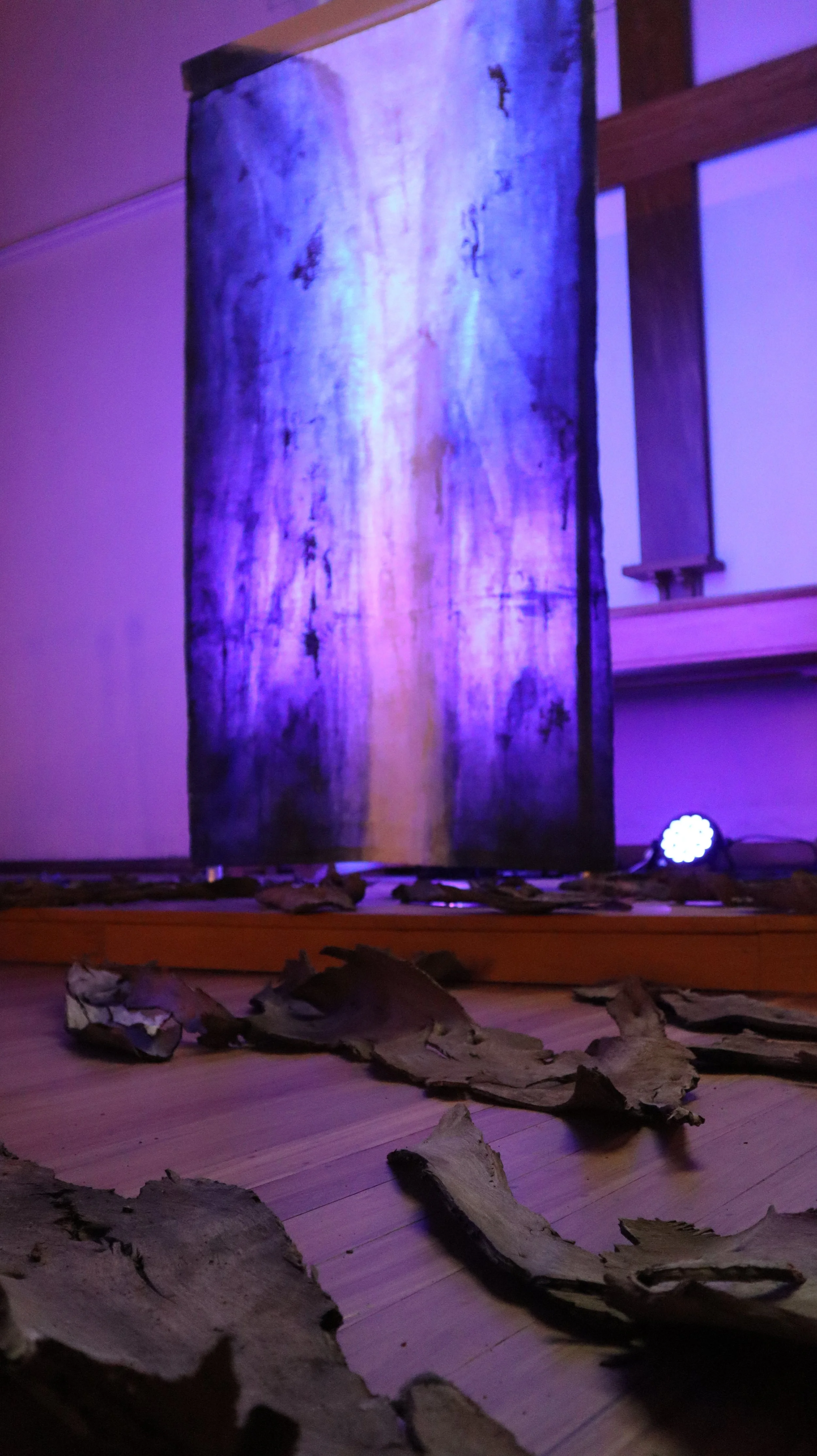
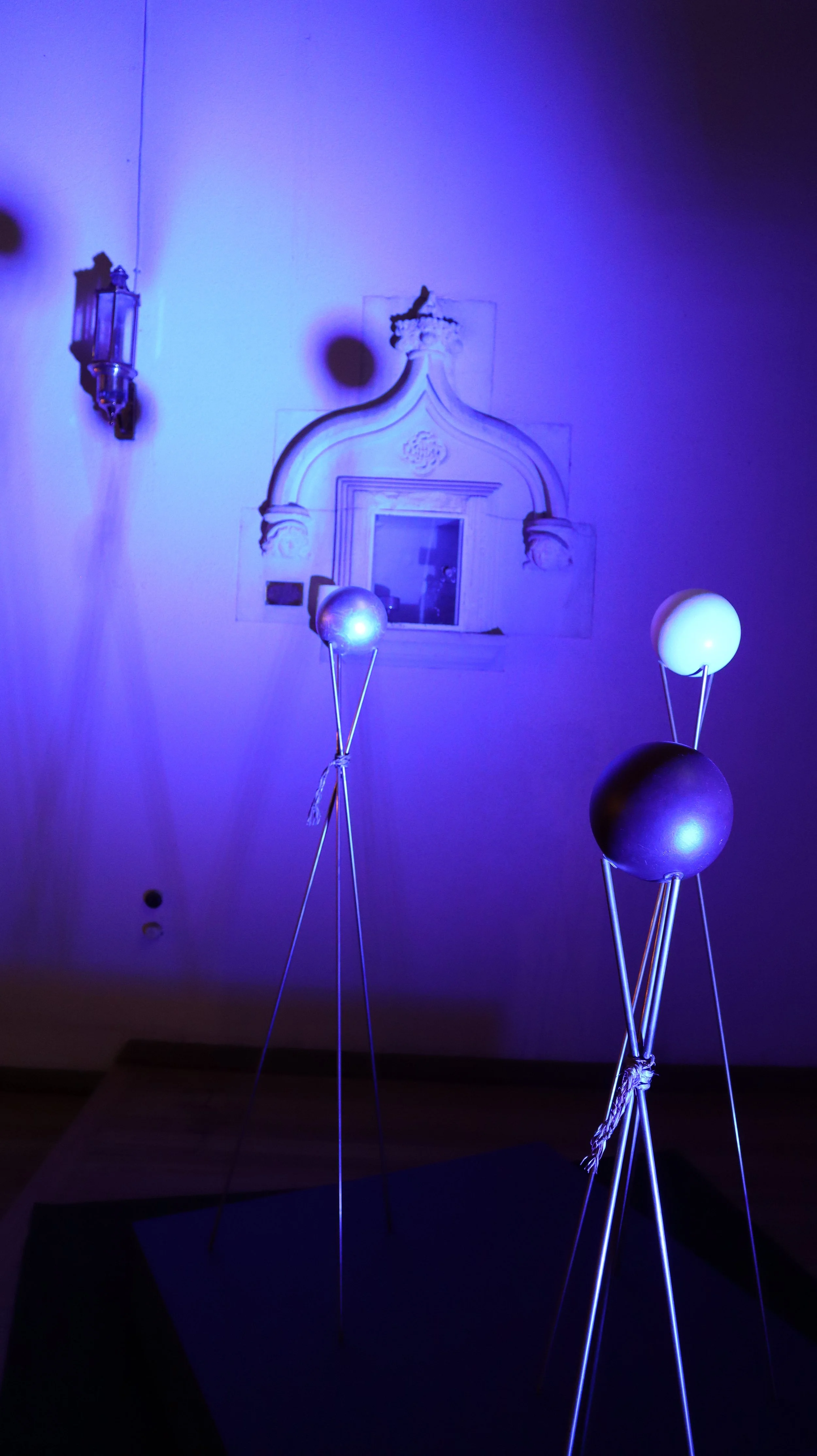
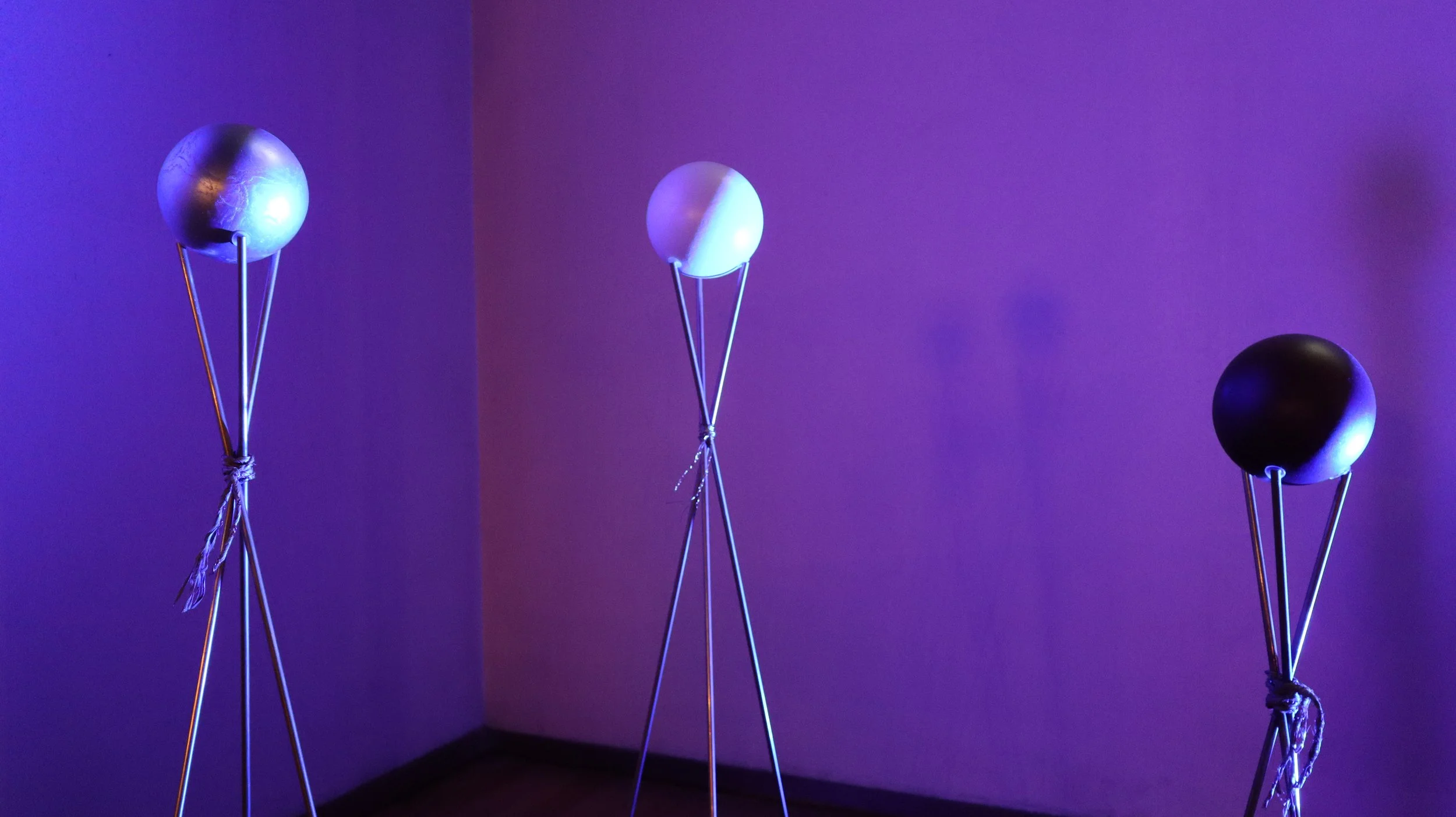
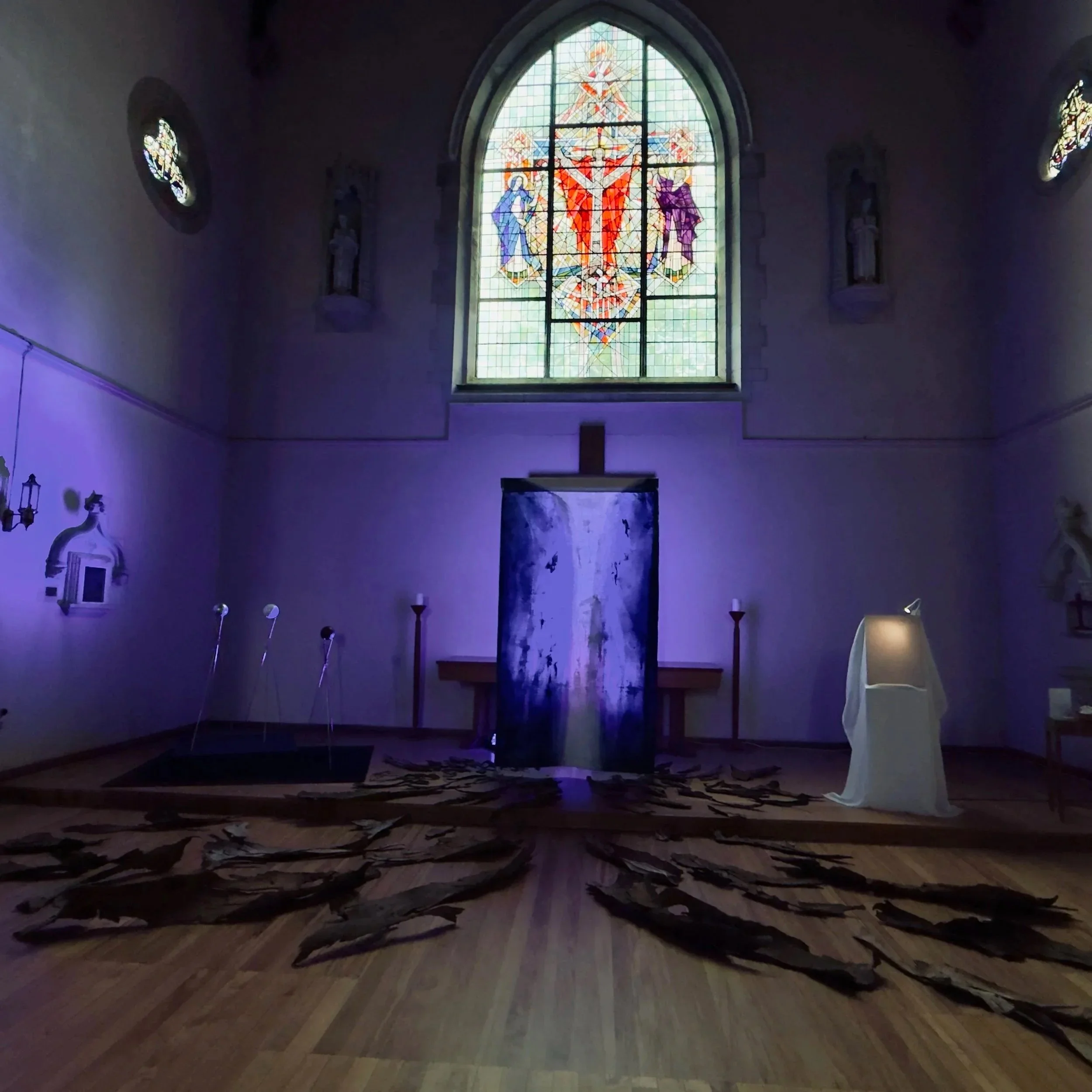
A suspended painted linen veil forms the central axis of the space. Beneath it, a floor installation of naturally shed bark introduces themes of release, transformation, and renewal — material carrying the memory of growth, weathering, and seasonal change. Hand-formed earthen spheres — The Light Within Matter — are created from soil, sand, ancient spring water, clay, and pigment, embodying a quiet transformation held within elemental matter.
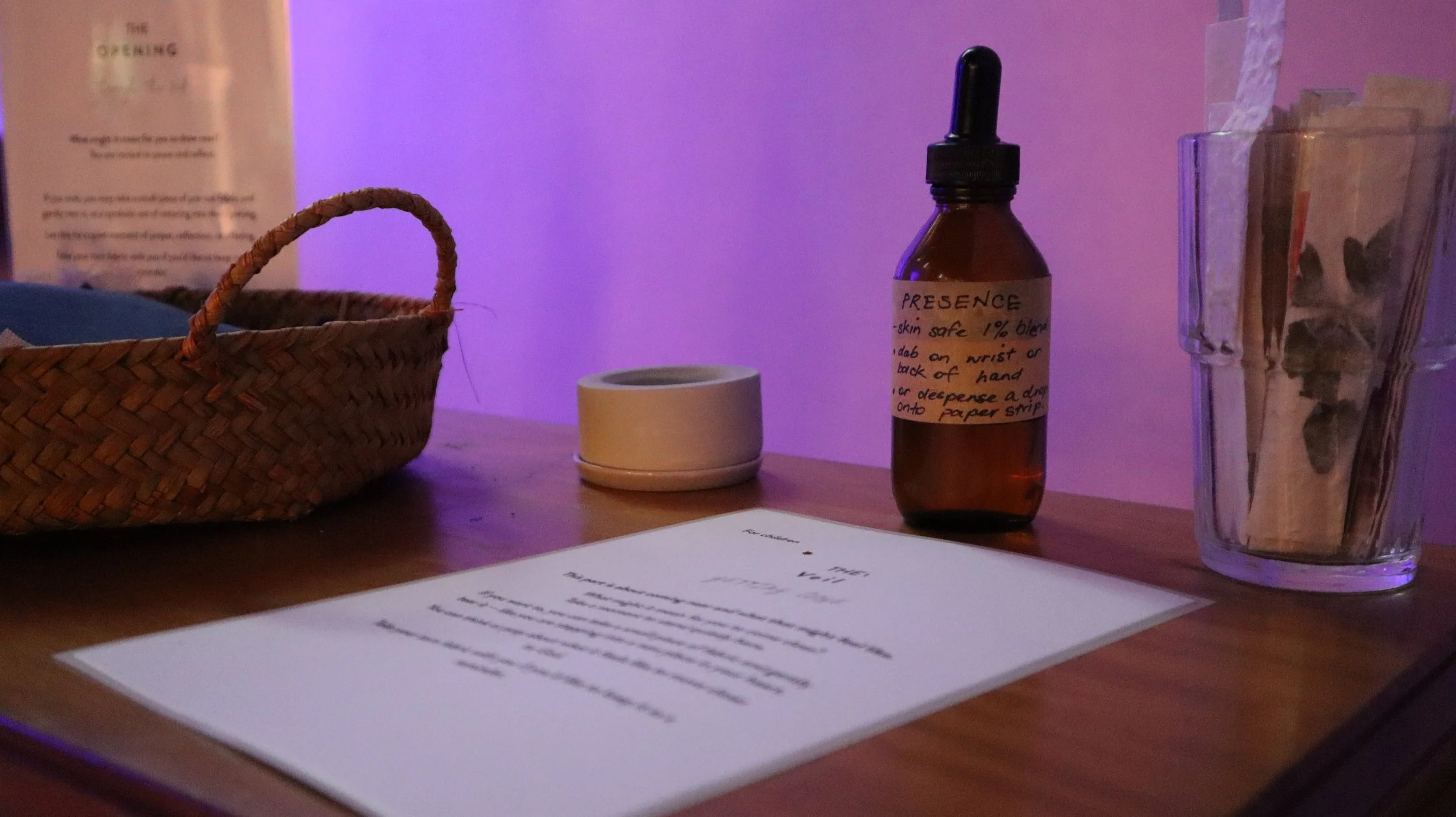
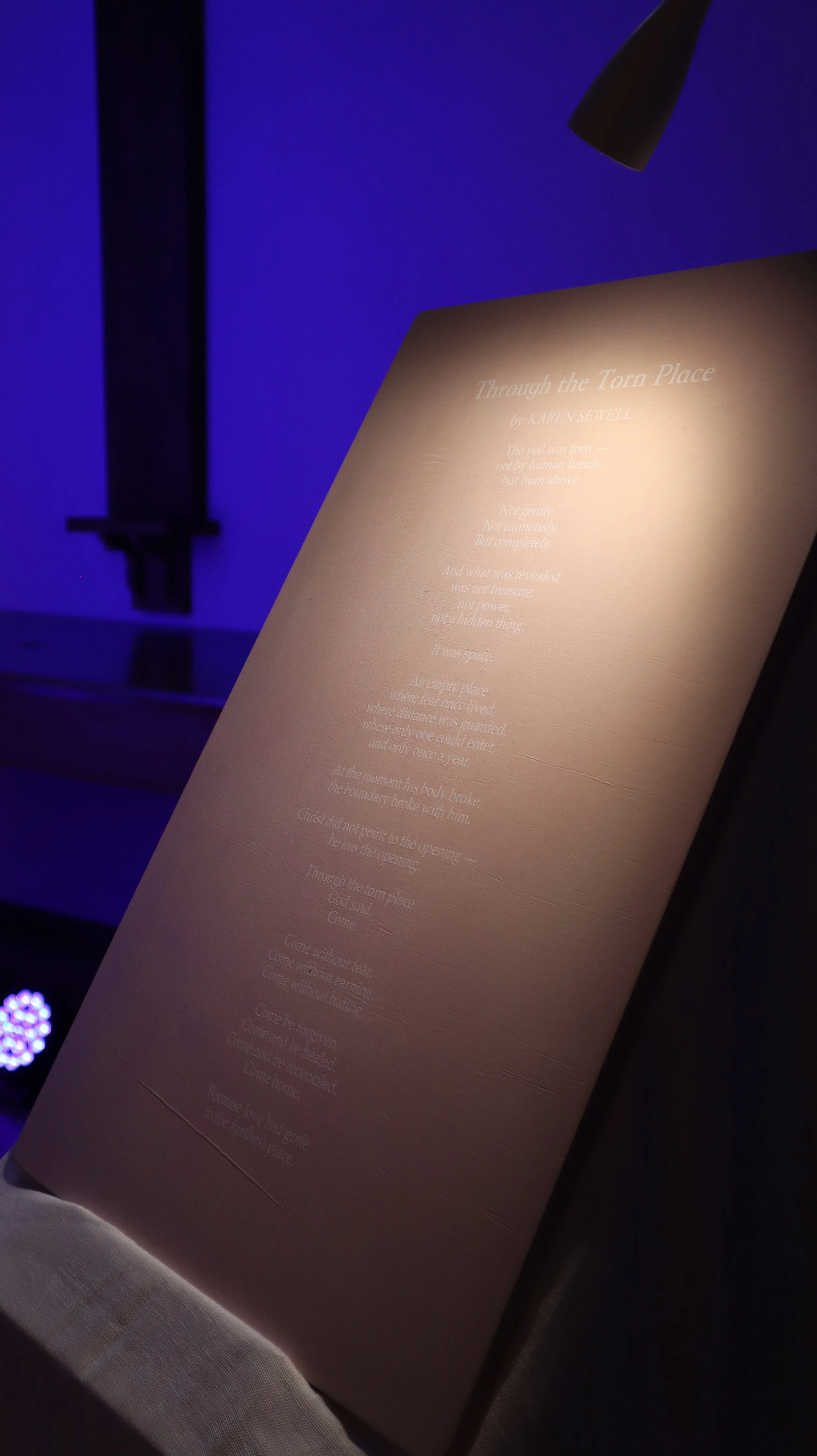
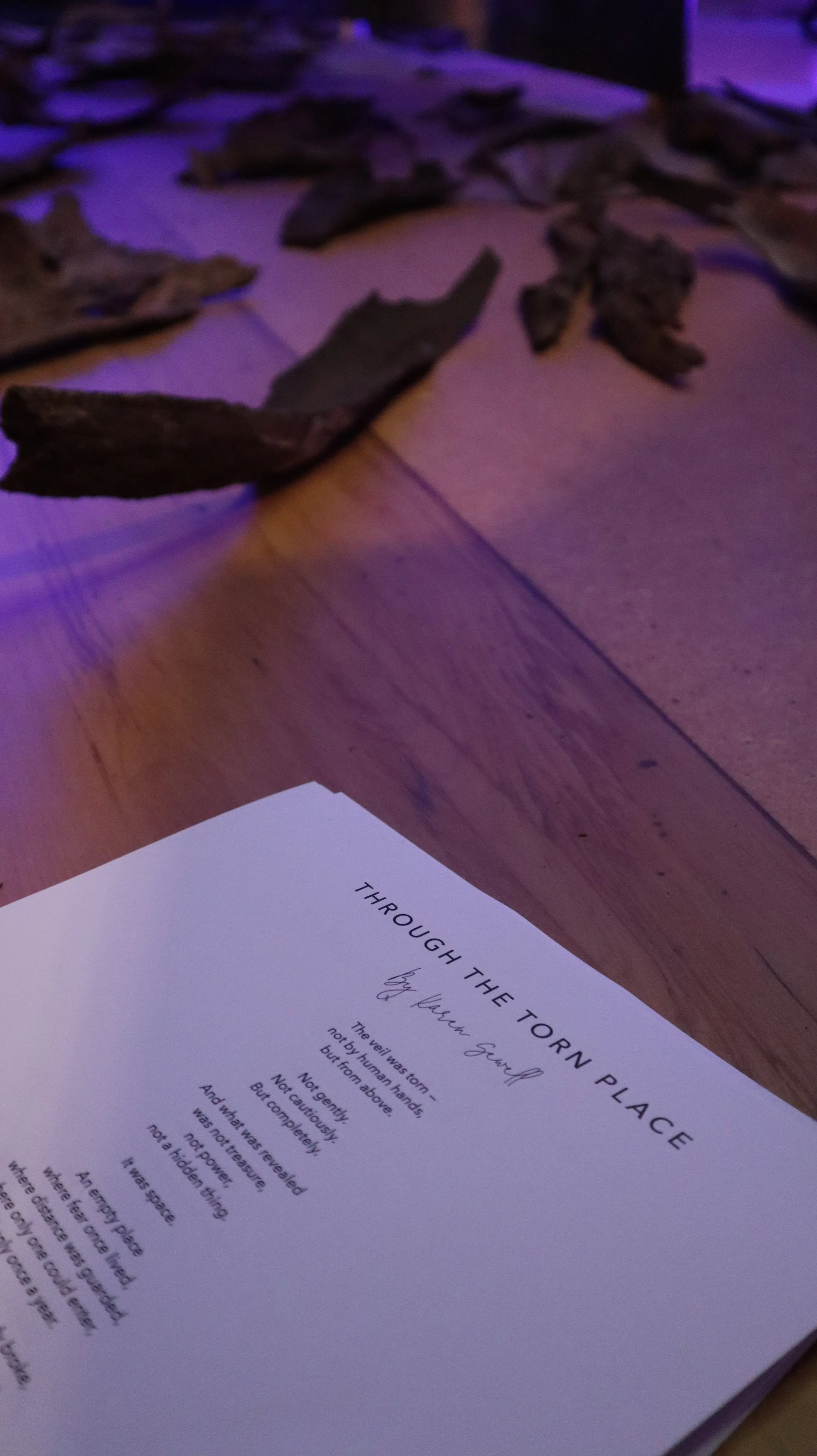
Two accompanying poems, What Opened and Through the Torn Place, extend the installation into language, tracing what is revealed when something once sealed is split apart. A subtle ambient scent, Breath, operates almost imperceptibly within the space — suggesting the unseen, the intangible, the breath that inhabits material form.
Together, these elements form a contemplative threshold within the site — an environment attentive to fragility, reconciliation, presence, and the quiet nearness that can emerge through rupture.
Suspended Linen Veil Work
One large unstretched linen veil is suspended within the church space on a plate and rail system. The linen is hand-painted with translucent veils of ultramarine, indigo, violet, and restrained warm light, allowing gravity, air, movement, and light to participate in the work itself.
This work is not a depiction of the veil, but a material meditation on threshold, yielding, and opening. The cloth remains intact, yet carries the memory of rupture through stain, translucency, gesture, and light. Hanging freely within the architecture, the linen responds subtly to air and spatial movement, echoing both vulnerability and release.
The suspended veil functions not as a fixed image, but as a permeable presence within the space — holding tension between concealment and revelation, weight and levity, absence and invitation.
Floor Installation: Shedding
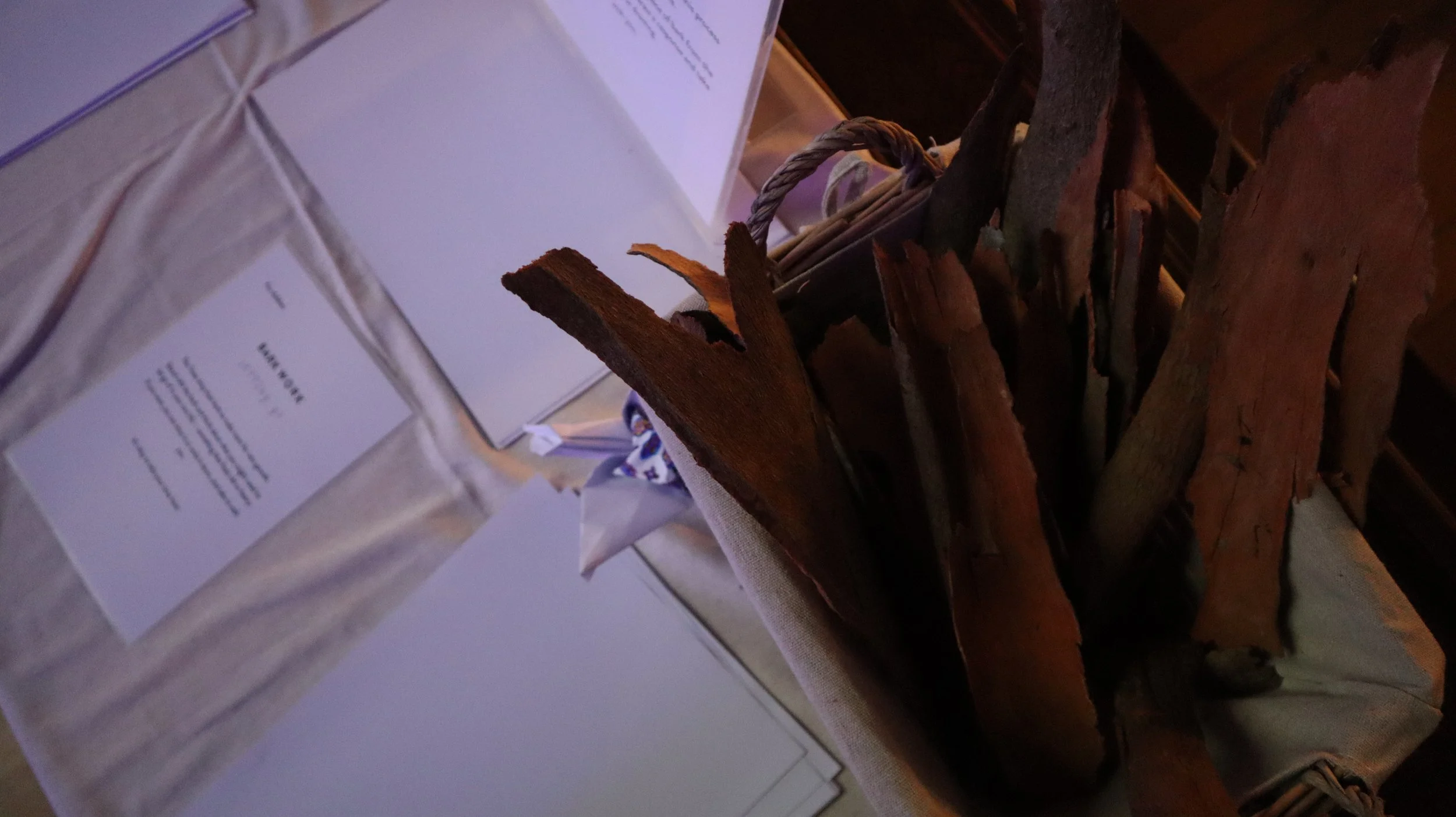
A floor-based installation composed of long ribbons and layered pieces of gum tree bark, gathered after being naturally shed from a living tree near the artist’s home. The bark is arranged in a loose, imperfect arc echoing the pattern in which it was found. The centre is intentionally left empty.
The bark functions as former skin — once protective, once necessary, now released. The tree continues to live and grow, forming a new covering. The work reflects on transformation, material memory, relinquishment, and the space that emerges when former structures are released.
The empty centre is absence understood not as loss, but as room — a quiet opening held within the work.
Dorodango: The Light Within Matter
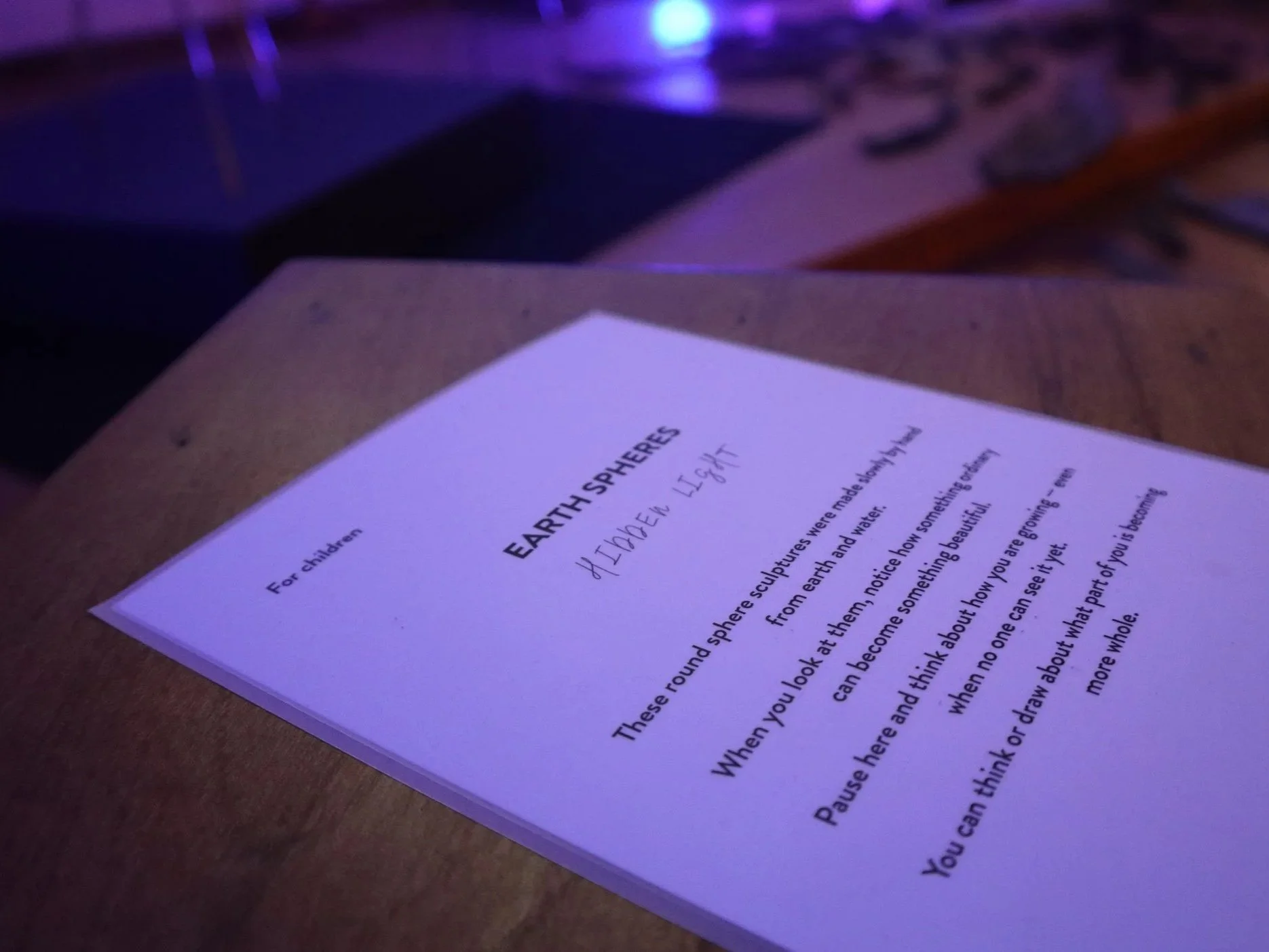
A small number of dorodango — hand-formed spheres made slowly from earth, clay, sand, ancient spring water, and pigment — are included as a quiet counterpoint within the installation.
Within the Easter arc of the work, the dorodango speak of gathering, wholeness, patience, and timelessness. Where the veil attends to rupture, and the bark to shedding, the dorodango offer a bodily and elemental response — matter gathered slowly by hand into complete form.
Within Sewell’s wider practice, dorodango function as contemporary meditations on material, care, slowness, and the unseen relationship between earth and spirit. Placed modestly on low plinths or shelves, they invite quiet attention, allowing meaning to emerge through proximity rather than display.
Scent (Unseen Work): Breath
A very subtle ambient scent is introduced indirectly into the space. The scent is not applied to objects nor located at a single point, but experienced atmospherically — as presence rather than object.
Composed of wood, mineral air, and earth notes, the scent functions as an unseen layer of the installation: relational, intangible, and difficult to locate. It quietly echoes understandings of spirit as breath — something sensed inwardly rather than held or contained.
The scent operates beneath conscious attention, extending the installation beyond the visual into atmosphere, memory, and embodied perception.
Poetic Text Elements
Two poems, What Opened and Through the Torn Place, accompany the installation as textual works integrated within the space.
Rather than describing the installation directly, the poems operate as parallel thresholds — extending the work into language, breath, silence, and reflection. They trace themes of rupture, nearness, longing, release, and the subtle transformations that can emerge through vulnerability and opening.
Together, the poems function as contemplative companions to the material works, inviting a slower and more inward encounter with the installation as a whole.
Venue: St Paul’s Church, Auckland City Exhibition: The Opening
Dates: 18 February 2026 – 3 April, 2026
Mediums: Sculptural installation, Painting, Sculpture, Text, Scent & Light