Where Matter Breathes
Olfactory compressed-earth sculptures
Earth holds traces of what has come before us—and receives what we leave behind.
In this evolving body of work, Karen Sewell compresses earth, clay and sand into sculptural stacks, interleaving linen, stone, charcoal and fragrant resins. Their exposed seams reveal what usually lies beneath our feet: strata of colour, texture and material held together as a body.
Scent extends the sculptures beyond their visible edges, inviting a close, bodily encounter. These works speak to deep time, burial and belonging—to our emergence from the earth and our eventual return. In The Earth Receives Us and No Foreign Earth, the earth makes no distinction between foreign and belonging.
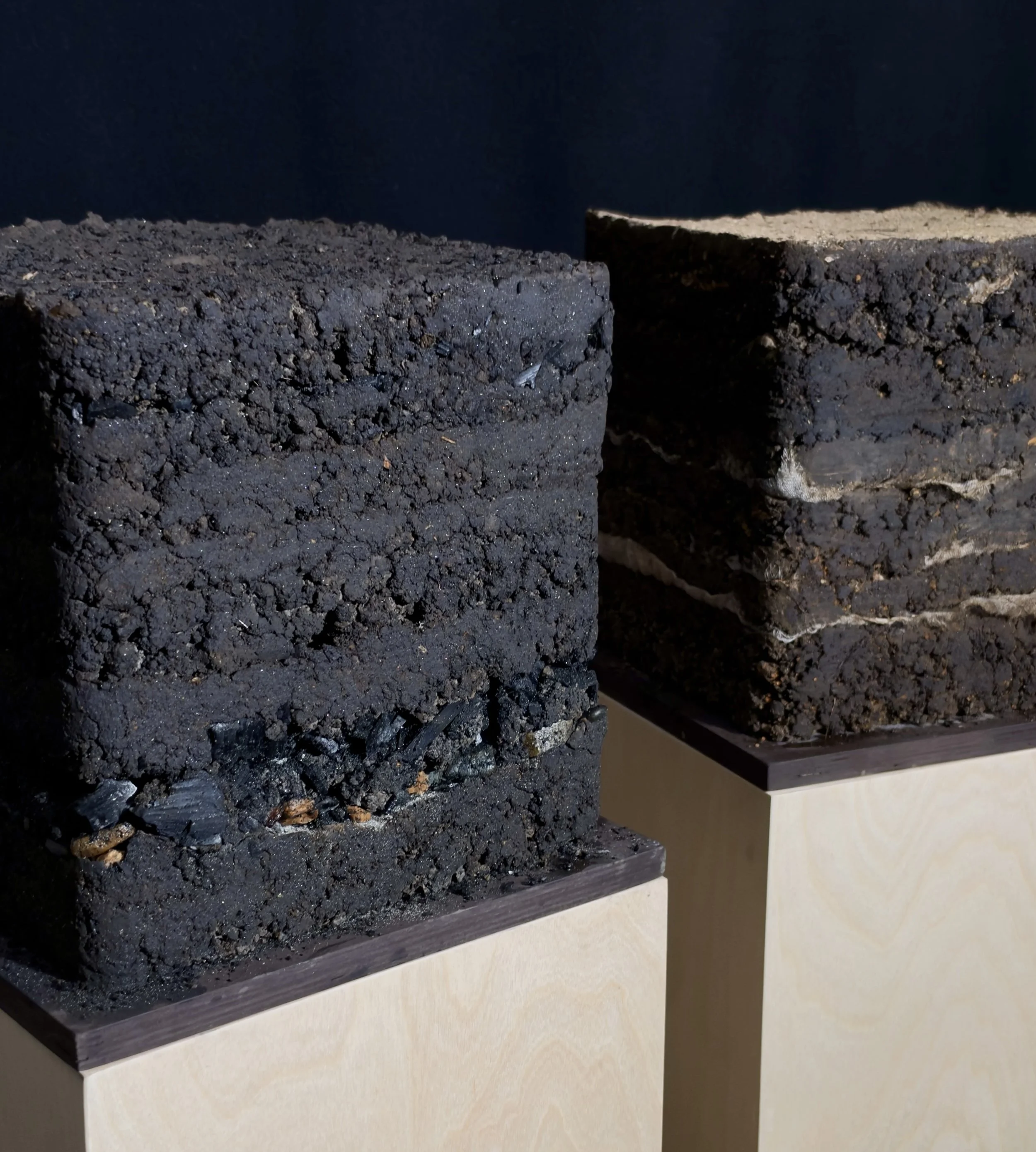
No Foreign Earth and The Earth Receives Us, installation view, Foreign Bodies exhibition Arthaus Contemporary, 2026
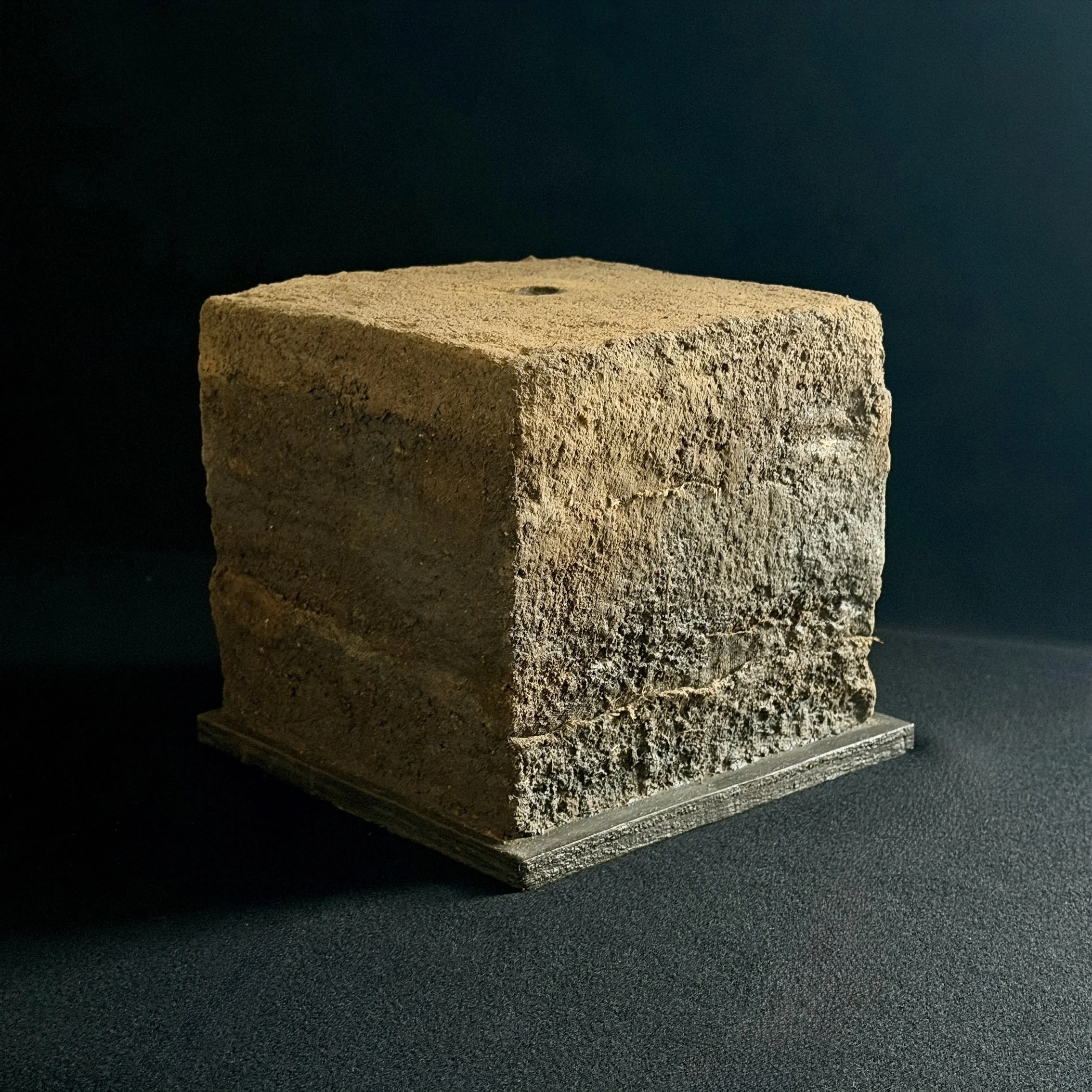
Where Matter Breathes, 2026 Olfactory artwork — compressed earth, Aotearoa New Zealand glacial clay and sand, linen, dried kawakawa, myrrh and frankincense resins, powdered oud, pure oud and myrrh oils, stones gathered on pilgrimage, linseed oil, pigment and acrylic medium on plywood base. 200 × 220 × 220 mm Finalist, 2026 Molly Morpeth Canaday Art Awards.
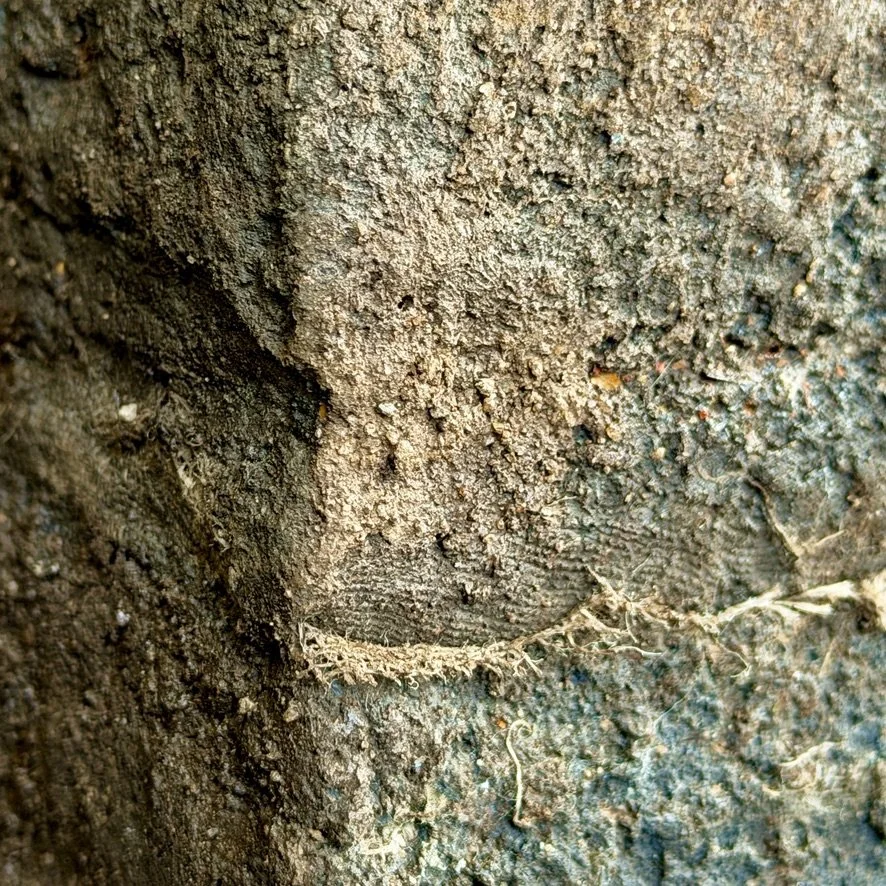
Where Matter Breathes detail
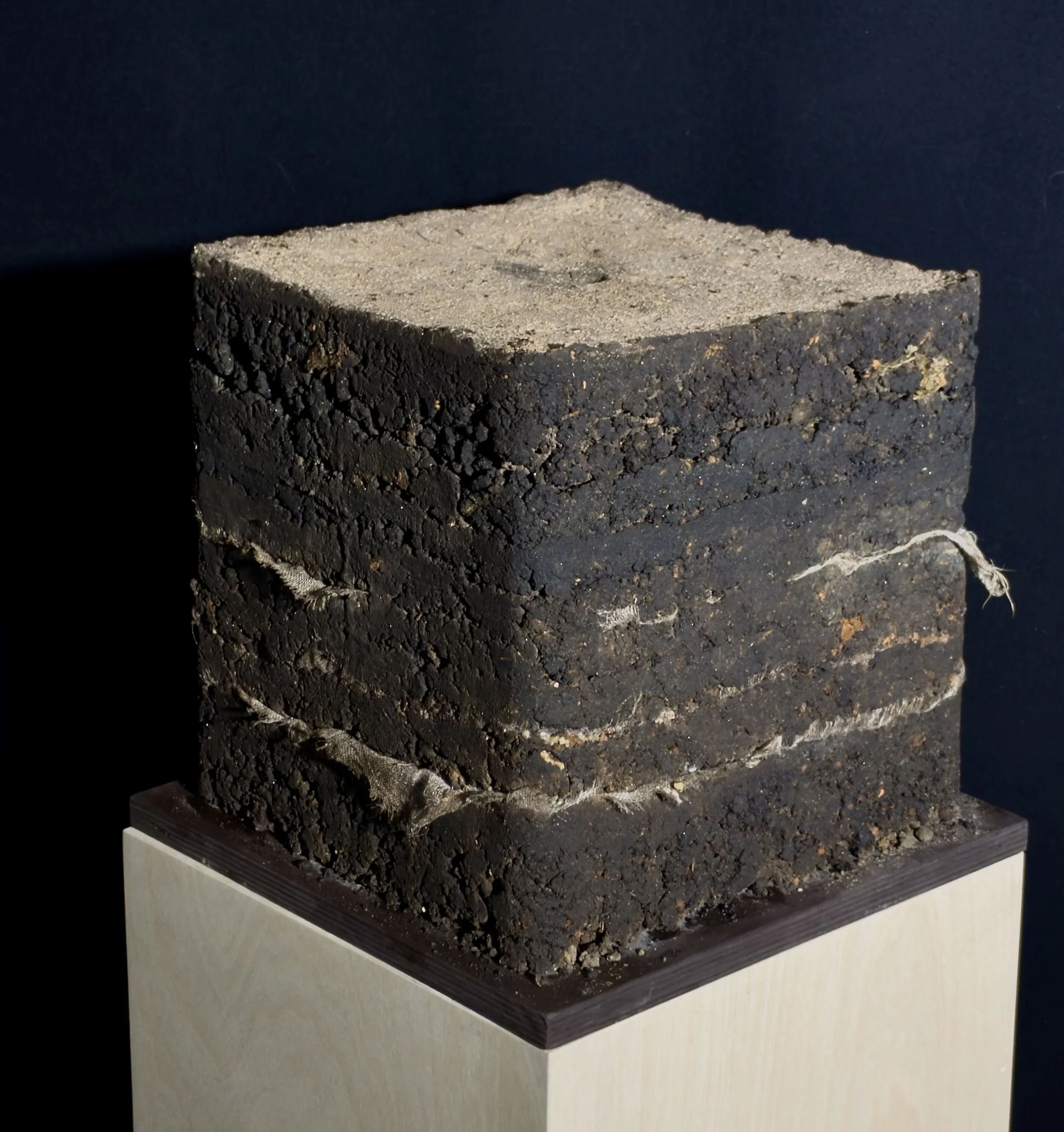
The Earth Receives Us, 2026, olfactory sculpture, earth, clay, sand, organic linen, resins of Myrrh and Frankinsense, Oud oil, Myrrh oil, organic matter. 290 x 290 x 290mm
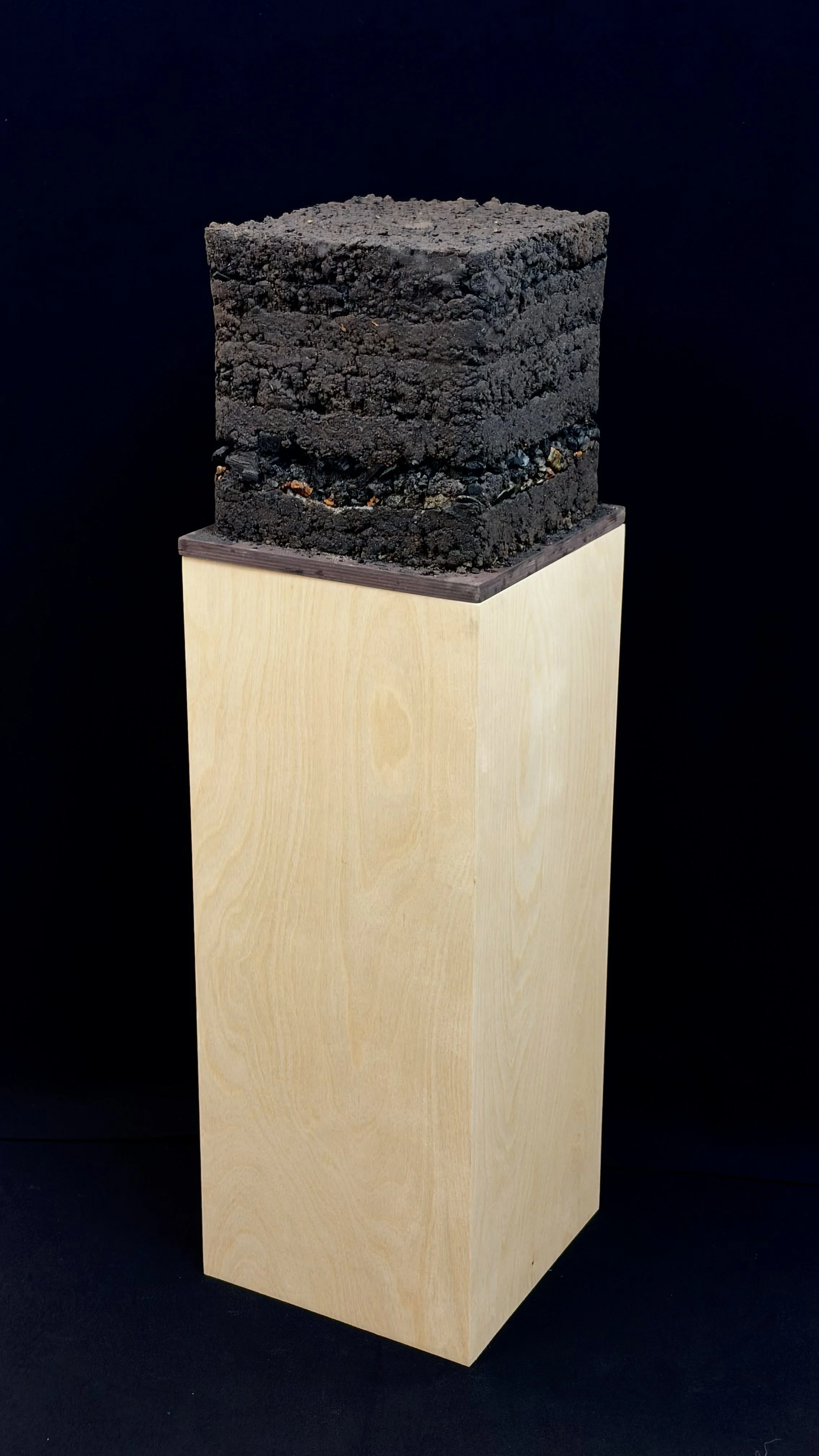
No Foreign Earth, 2026, Olfactory sculpture 290 × 290 × 290 mm
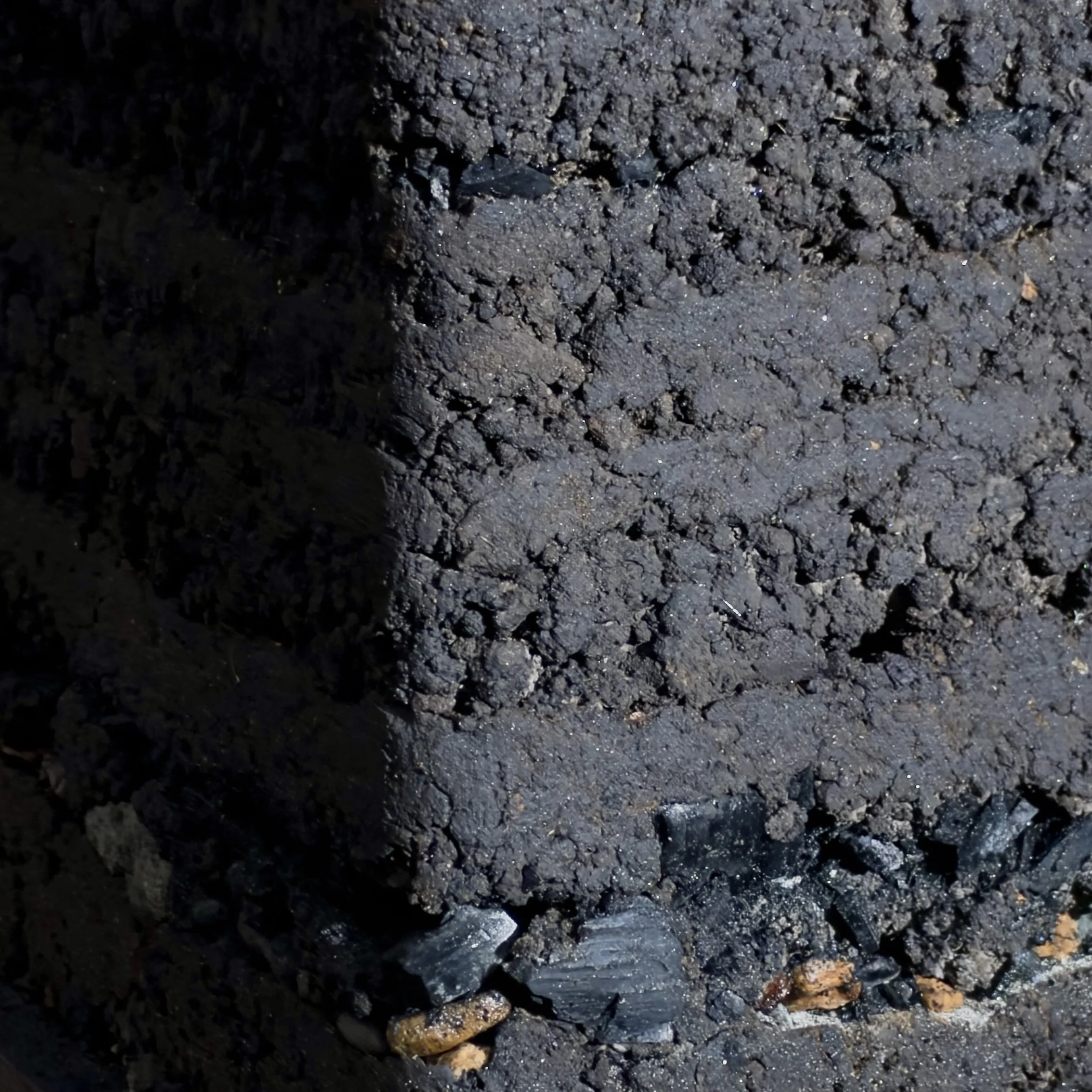
No Foreign Earth, 2026, Olfactory sculpture 290 × 290 × 290 mm detail
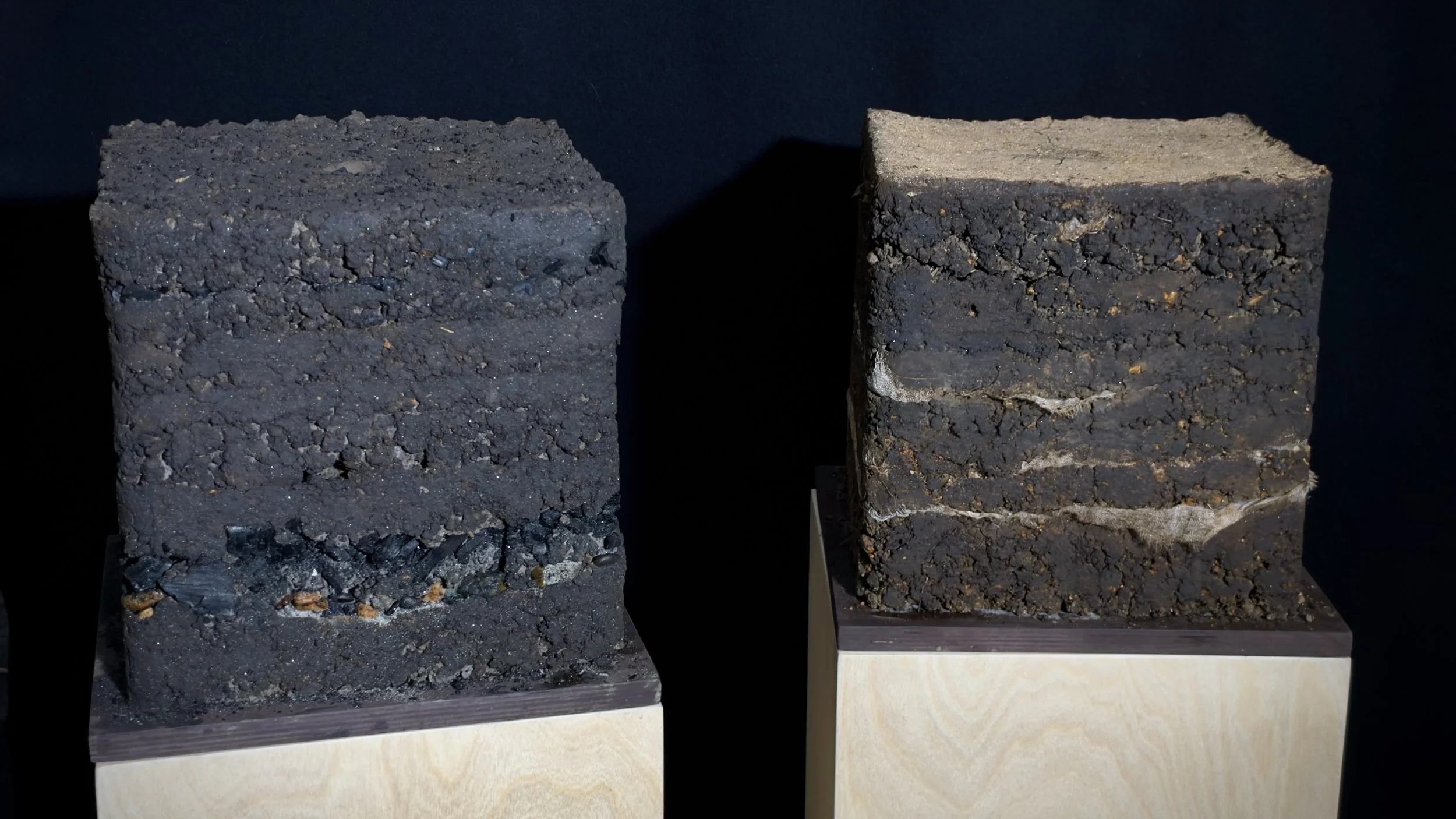
No Foreign Earth and The Earth Receives Us, installation view, Foreign Bodies exhibition Arthaus Contemporary, 2026
Where Matter Breathes
Where Matter Breathes is an evolving body of olfactory sculpture formed through the slow compression of earth, clay, sand, linen, plant matter, stones, aromatic resins and oils. Dense and geometric, the works hold these materials in a temporary state of cohesion. Their surfaces reveal seams, fragments and subtle variations in colour, while much of their interior remains concealed. Each sculpture takes shape as a body: assembled through pressure, responsive to its surroundings and continuing to change beyond the moment of making.
Sewell brings attention to matter ordinarily encountered beneath our feet. Deep ochres, dark earth, the glint of sand and exposed edges of linen invite close looking. Within these compressed strata lie kawakawa, crushed myrrh and frankincense, and stones gathered during pilgrimage. Traces carried from Carningli, Avebury and Ffald-y-Brenin sit alongside resins brought home from Prinknash Abbey. Embedded within the sculptures, these materials form an unseen geography of encounter, journey and remembrance. Their significance exceeds what the surface can disclose.
A small depression in the upper surface receives drops of oud and myrrh oil. From this central well, fragrance enters the surrounding air, extending the work into the space of the viewer. Scent is a primary sculptural material, giving the work a presence that cannot be contained by its visible edges. Encountered through breath, it brings object and body into intimate relation, awakening associations that may precede conscious recognition or language.
The works engage sculpture’s enduring concerns with mass, volume, geometry and gravity. Their restrained forms recall the language of minimalism, yet their irregular surfaces and layered interiors complicate any impression of uniformity or neutrality. Earth carries the residues of former life, the histories of its formation and the particularities of where it has been gathered. Compression brings these histories together without making them fully available to view. The sculptures ask for an encounter sustained through proximity, time and more than sight alone.
Left unfired, the earth and clay retain a vulnerability to moisture, erosion and fracture. Drying, settling and small surface changes remain part of the work’s unfolding life. The apparent stability of the block holds a tension with the changeability of its constituent matter. These are forms held together for a time, materially connected to the processes from which they emerged and to the possibility of eventual return.
This relationship between formation and dissolution also connects the sculptures to the human body. Earth is both intimate and ancient: the ground of daily life and a repository of processes extending far beyond a human lifespan. Linen, aromatic woods and resins introduce associations with wrapping, anointing, burial and ritual care. Concealed within the compressed body, they suggest a presence held within matter, while fragrance moves outward through the air.
In The Earth Receives Us and No Foreign Earth, these concerns gather around questions of belonging. A body buried far from home becomes, for a time, a foreign body within the earth. Yet the earth ultimately makes no distinction between foreign and belonging. Burial becomes both a particular human story and participation in a shared material cycle.
The repeated addition of oil tends and renews the sculptures. Fragrance gathers and recedes, giving each encounter its own duration and intensity. Through this quiet act of care, Where Matter Breathes remains in an ongoing exchange with its surroundings. Earth is encountered as matter that holds histories, receives bodies and continues to transform.